Beyond The Tent !!!

I’ve read this title in a newspaper and i was wondering  , yes.. what happens beyond the tent ? how does it feel to live in a refugee tent ? how do people see this from the outside ?

to clarify this  I AM A REFUGEE  , a Palestinian refugee who lived in Jordan in a different conditions that Syrians live now , i know how it feel to be a refugee and every single speech or thing related to this subject it touches me from the inside .

the question i asked  reminds me of the Syrian refugee’s camp northern of Jordan (ZAATARI) camp which is full of tents .

There are many international organizations that try in every way to help refugees in the affected areas and places of conflict, but few of them tried to face the problem architecturally , If we solve the problem of housing, it is possible to solve many other problems only by providing suitable accommodation. I do not mean a tent that does not protect me from summer heat and winter cold , It is a simple dwelling where the most basic elements of a decent life are available.
Many problems accumulate due to tents and many diseases as many people know also accumulate according to lack of cleanliness or lack of availability of clean water sources and even places to get rid of waste which cause pollution problem , which in that place a big factor of illness  and diseases ,  Tents may sometimes turn into a landfill for waste and that’s what I’ve seen with my eyes.

Plus we can’t to remember that a big amount of these people are kids ans infants , in a need of good health and education which reflect as i see on facilities (Schools, hospital or health units and social centers to develop their personality and mind ) .

and we should keep in mind the Urban Planning of these camps , because as said refugee’s camps are (future cities) for people inside them .

i don’t know what are the steps of the process of reforming this situation or how we can develop from places in urgant need of assistance, but what I know is that (one hand does not clap) , we must all cooperate as architects and as civilian citizens.

I’ll leave yo with some photos and let the photos speak

if you have opinions or thoughts about this leave a comment , per favor

architectural ideas are so welcomed 🙂

yours ……..Archdoodz

ref1ref2ref3mideast_jordan_syria_refugees_13427961ref5


Architecture in the OTTMAN Empire

Historically the establishment of the Ottoman Empire from a small emirate in the era of Anatolia was next to the Seljuk emirates, led by the Roman Seljuks.
When the Seljuks and Byzantines were weak in the 13th century, the Turks encouraged the two countries and that was the birth on the Ottoman Great Empire between 1299-1918 AD

After that the Ottoman state headed after it included other countries towards the Arab world, and ruled the Mamluks in Syria, Egypt and Hijaz and took Algeria, Tunisia, Libya and then Baghdad.

in Europe the Ottoman Empire included Bulgaria, Hungary, Yugoslavia, Greece, part of Poland and Russia. Where Islam spread in parts of Bosnia, Herzegovina, Macedonia.
Thus the Ottoman Empire became the largest and most powerful empire in the world.

Architecturally ; Because of its containment of the most important cities and capitals of Arab cities  such as Cairo, Damascus , Jerusalem and Baghdad  it resulted in a large architectural diversity and prosperity , And this is shown in the construction of mosques and religious and cultural complexes that include the mosque, school, hospital, cultural gatherings and many more
The buildings built over the past 6 centuries by the Ottoman Empire (a period not enjoyed by any Muslim country) are a huge heritage, mostly in Anatolia and some Arab countries (most of Europe was destroyed)ot1

general look :

The mosques from the outside seem to be very large and high, high above the surface of the earth or above a market or shops that ascend to them in many stairs
the photo above shows domes and semi-domes are seen around the central dome of the (mother dome).

The heights in this cluster are characterized by consistency and harmony, interspersed with other forms and elements such as windows, arches and colonnades .
The minarets start abruptly through the block with fine texture, multiple balconies and a conical flour head

Architectural elements:

1- The domes:
The dome is the main element in the roofing , its a large central dome and semi-domes and small domes around or branch out of it , the shape of the dome is Spherical below the hemisphere slightly covered with marble sheets from the outside and cylindrical dome slightly tilted towards the cone with a large number of windows separated by prominent pillars.


ot22- Arches :

The main major arches were of the tapered type (drawn from two centers).


Use the Persian arch (drawn from 4 centers) and the upper arches are concave outward.ot7
Half-circle nodes and nodes (less than half a circle) are used in doors and above windows.
in Borsa (a city in Turkey) appeared in a contract consisting of a straight strip in the most expensive and two brackets on both sides (example: the Mosque of Yashil). as the photo below :


Columns:
Columns are made of marble or stone, and were used to carry the arches of the paths and secondary arches in the prayer hall.

Minarets:
During the Ottoman Empire Minaret in Arabic (Ma’athen)  are not as square or polygonal as in previous decades, its cylindrical ones as originally Seljuk , Higher and agility With many faces with Multiple balconies , Ends with a fine conical head, coated with lead.

ot5

Doors and windows:
Doors / gates leading to the mosque or the prayer hall are regular in proportion to the height of the facades and lower than the facade itself  , Increase in side (Mihrab) .
doors and windows was full of Inscriptions ,patterns ,ornaments and stalactites
golden written decorations and ornaments  (as in Seljuk) , special decoration were in the gates of HARAM

Windows / Mostly similar topped by a circular or tapered arch,stucco inscriptions with colored glass

Mosques in Arabic (Masjid):  mosques were -in the first phase – Before the conquest of Constantinople greatly influenced by the planning of the Roman Seljuks in Anatolia (small size, square hall with one dome topped by a gallery instead of the hall). Example Yildirim mosque in Borsa- Turkey

bo1

and yisil mosque

bo2.jpg

The second phase for mosques in the Ottoman Empire was after the conquest of Constantinople  In 1453 the Ottomans converted the church of St. Sophia (Hagia Sofia), which dates back to the fifth century AD to a mosque after minor modifications.
The most important features of Hagia Sophia The huge central dome in the center of the building which is  most important influence on the architecture of the Ottomans after the opening of Constantinople in addition to the semi-domes surrounding the central dome.
A giant diagonal dome of 31 m Diameter  and a height of 55.92 m, the largest dome until that time , The Ottomans wanted to compete in the domes of their mosques, accept the idea of domes because they fit the architecture of the Roman Seljuks, which is characterized by domes and suitable for covering the square shape

The third Phase was the era of architect Sinan (Mimar Sinan) and his students
this Architect was unique, distinctive, talented and highly skilled compared to people  at his time in the 16th century AD Sinan aged 4 Sultans and built 350 buildings.
Al-Khasrafiyah Mosque in Aleppo The first work of Sinan (which is modest compared to the projects later carried out in Istanbul)

one of the very special mosques to me is Suleymaniye Mosque in Istanbul i’ve seen nowhere such beauty i leave you with the photos :

sul3sul4sul1sul2


at the end i hope that you enjoyed this post feel free to leave comments and to follow my blog …

yours ………..Archdoodz 🙂

A Famous Architect from Jordan


jaafar

        A winner of Aga Khan award for Architecture ,Ja’afar Toukan a Palestinian Jordanian architect who was born in Jerusalem 1938, Toukan was a son of the Famous ؛Palestinian Poet (Ibrahim Toukan) and to He comes from a family full of writers, intellectuals, poets and artists from the city of Nablus – Palestine

He was the Chairman of the Board of Directors of the Union of Consultants for Engineering and Environment, based in Amman. He won several awards, most notably the Aga Khan Award for Islamic Architecture at its eighth session in 2001.about the winning toukan said : “I feel proud and happy in Aleppo, which I have not visited in more than 30 years,” ” This feeling coincides with my belief that my winning and the winning SOS Children’s Village project in Aqaba will be a prestigious international award. But represents a global honor for the architects and architecture space and the role of architects in Jordan.

the SOS village of children (the wining project )  photos from http://www.akdn.org ja10ja9ja2ja1ja3ja8ja5ja4


ja7

His Philosophy :

Jafar Toukan believes that architecture and Islamic heritage are not limited to the Arab style as the only way, and vice versa, so that there is no direct link between Arabic Architecture and Islamic architecture. In his view, architecture has a human character only. There is no difference between European architecture during the Renaissance or Asian architecture. Islamic architecture, all of which bore a purely human character.

he believes that construction and design are constantly changing, so that the translation of the emotional response with the specific geometrical situation to a physical state within the limits of logic is linked to the economic and social conditions of each new building. On this basis it is difficult to start a new work based on a previous architectural idea of another building , But must always start again to return to the point of zero and start from it in an abstract, necessitating the constant development of the efficiency and experience necessary for each work, because in practice will be similar in terms of challenge to the first engineering work in the caree

His Famous Projects And Buildings :

  • Jordanian University For Science And Technology ( With Kenzo Tange)
  • Dunes Club in Amman -Jordan
  • Al-Rajihi 5 stars Hotel in Saudi Arabia
  • Arbil Mass city in Arbil – Iraq
  • Dead Sea Panoramic Complex in Dead-Sea of Jordan
  • Yasser Arafat Memorial Museum in Ramalla -Palestine
  • Marriott dead-Sea resort in Jordan
  • Abu-Dhabi small an Medium Court Houses in UAE
  • and much more amazing projects and buildings .. after the death of Ja’afar Toukan his team continued the great work until now .


i wish you Enjoyed this …. leave comments of your suggestions about the next post

yours …………….Archdoodz


Islamic Architecture (Part 1 )

The Islamic religion, which started from a brief word {Read} [al ‘alaq:1], into the cave of Hira, was a declaration of the scientific content of the Secular Islam in addition to the religious content. And was able to Islam, including the  human thought, spread over a wide swath stretching from China to the east until the edge of the French capital to the west. The Islamic civilization has produced an integrated artistic personality in the arts and architecture and urban planning, have characteristics that distinguish them from other civilizations in every part of the world, which spread Islam. Islamic Architecture receptive physical capacity of schools which preceded it all, the prevalent in Western Asia, and learned science , art, and their heritage , and then became a great instructor, you will know its taste forever what taken special style in 100 years, was able to amplify these technical personal this special identity that has characterized the Islamic civilization.


Previous  schools of Islamic architecture :

beyond the borders of the Arabian Peninsula, Islam was widespread in the areas that were under the sovereignty of the Byzantine and Persian empires, it was the scene of the richest and most sophisticated civilizations, and then inherited from those empires architecture and urban planning, which were originally combined the traditions and local technical areas of their influence, the architectural and artistic schools were dominated by the following:


1 – The Byzantine school or Eastern Christianity: was widespread in Asia Minor (Turkey), Syria and Palestine and east of Jordan, and has signed this region under the influence of classic style about 1000 years since the era of the Islamic conquest, start New topics as necessary until the ultrasonic affected by Hellenistic philosophy.بيزنطي.png


2- Persian School: prevailing in Iraq, Persia, and has been affected by this school of the arts, architectural and decoration, quoted from the school (Al-rafediya) mesopotamian prevalent in the third and second millennia BC.فارسي.png

3- Coptic School: was widespread in Egypt, the heiress to the ancient Egyptian school tradition, which exceeded the impact of the Egyptian border.

قبطي.png

The  diversity of expression of the architecture in the Islamic  school

Muslim Arabs benefited from traditional technologies and patterns that prevailed in the countries they opened and buildings, in the first period of Islamic school, and then crystallized integrated technical school carrying the country’s Islamic identity and coherent as a whole, and it became difficult to know which assets quoted was marked by other schools.


Owing to various factors, including:
The religious factor, which is the most important factor, has added the Islamic character which is the essence of Islamic thought and doctrine to the religious and civil buildings, such as praise mosques and mosques according to a specific system and planning to meet the functional need and pray. The other factor is the geographical factor, and the similarity of the relative climate in the regions of Islam, where dominated by the desert and Mediterranean climate similar to the urban fabric in the planning of cities, and known so-called compact or spontaneous tissue. In the architectural field, the architecture was characterized by environmental design, by emphasizing the closure of buildings from the outside and its opening on the inside around the open courtyard where the open air, water, sky and plants


Characteristics of Islamic Architecture:Islamic buildings were characterized by the richness of its architectural vocabulary, and its interest in all aspects of life. Religious buildings emerged from mosques, schools, At-takaya, Az-zawiyah, ghanahat  and civil buildings such as houses and palaces, public buildings such as hospitals (baimaristan), khanat (passenger stop stations), public bathrooms and markets. There was also interest in parks and waterways in urban planning as well as military architecture, and built castles, fortifications and lattices (defensive castles along the coastline). The richness of Islamic architecture is not limited to the diversity of buildings and their themes; it is characterized by the richness of its vocabulary and its architectural elements. These elements include domes / cupolas, vaults, pointed arches, penannulars, horseshoes arches, multifoil , arches , Minarets, niches, porticos, transition elements of pendentives, stalactites, exposed interior spaces, waterfalls, waterways distributed in urban neighborhoods, inland waterways, and iwans  (three-walled living rooms overlooking the courtyard), and various ornamentation elements. The Arabic scriptand writting emerged as a decorative element in the various buildings and symbols of the Islamic religion, the language of the Holy Quran.

I leave you with some images of Islamic architecture .. to be continued on another post of please leave comments ,questions and suggestions ….. thank you

Arch doodz

772ced310e80600c955abfae9291927220160623_11081archi1i2i3i4i5i6i7i8i9i10i11i12i13i14

Zaha Hadid (the Queen of deconstruction)

zaha if you don’t know Zaha Hadid, she is an Iraqi-British architect who has  died suddenly aged 65, with a selection of projects that demonstrate her importance to contemporary architecture.

Hadid suffered a heart attack  following treatment for bronchitis at a Miami hospital. One of the most prominent and successful female architects in the world, she has won countless awards and accolades for her contribution to architecture.

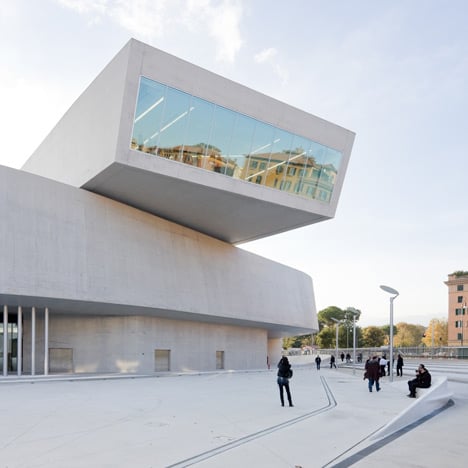
MAXXI museum by Zaha Hadid
MAXXI museum, Rome, 2009

The Iraqi-born British architect was the first woman to be awarded the Pritzker Prize – architecture’s equivalent of the Nobel Prize – in 2004, and the  first woman to be win the RIBA’s Royal Gold Medal in her own right.

A graduate of London’s Architectural Association in 1977, she worked with former professors Rem Koolhaas and Elia Zenghelis at OMA, before establishing London-based  Zaha Hadid Architects in 1979, which she ran with Patrik Schumacher.

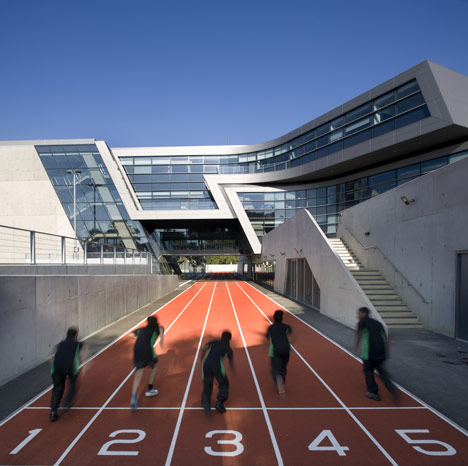
Evelyn Grace Academy by Zaha Hadid
Evelyn Grace Academy, London, 2010

Her use of unusual shapes became apparent in early competition proposals for The Peak terminus in Hong Kong (1983), the Kurfürstendamm in Berlin (1986), and the Cardiff Bay Opera House in Wales (1994).

But it was the 1993 Vitra fire station in Weil Am Rhein, Germany – her first major built project – that thrust Hadid into the spotlight. Although the building was deemed unsuitable by users, its angled concrete walls and sharply pointed portico gained attention from critics and launched her career.

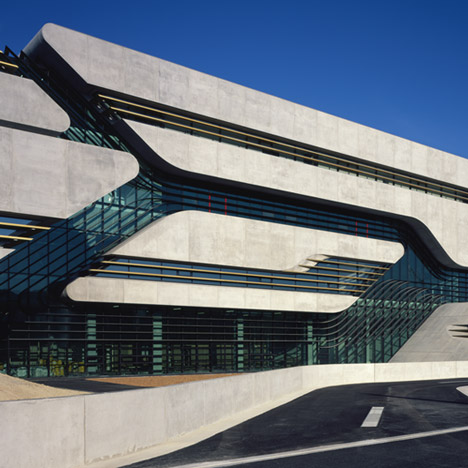
Pierres Vives by Zaha Hadid
Pierresvives, Montpellier, 2012

Hadid’s work with concrete continued with projects such as Innsbruck’s Bergisel Ski Jump (2002) and Cincinnati’s Rosenthal Center for Contemporary Art (2003), which both demonstrated how she used the material to create irregular angular forms. In larger projects such as the BMW Central Building in Leipzig and Phaeno Science Centre in Wolfsburg, both completed in 2005, Hadid was able to further experiment with concrete’s sculptural capabilities – introducing dramatic curves to the angled structural elements, ceilings and window shapes.

As Hadid’s career advanced, projects continued to grow in size and budget, and her use of curves and sinuous shapes became even more ambitious.

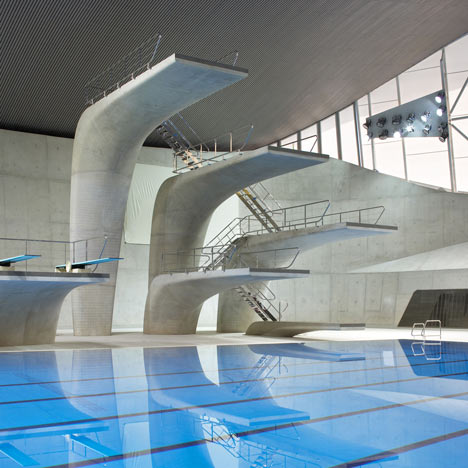
Aquatics Centre by Zaha Hadid
Olympic Aquatics Centre, London, 2012

The  MAXXI museum in Rome, one of her most critically acclaimed projects, features black staircases and light fixtures that snake through the strips of structure. The building won Hadid the stirling Prize in 2010, and she accepted Britain’s most important architecture award again the following year for the Evelyn Grace Academy in London.

The Aquatics Centre for the London 2012 Olympics Games features a wave-like roof that soars over the swimming and diving facilities.

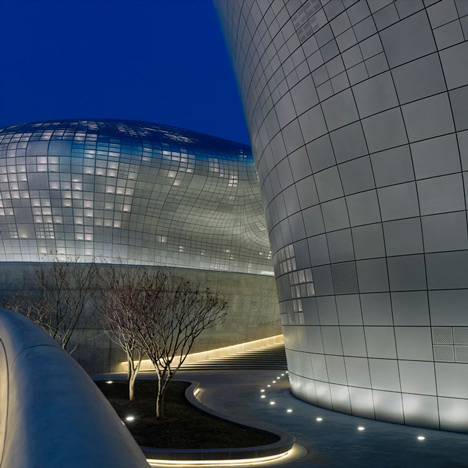
Hadid, along with Schumacher, was a champion of Parametricism, which relies on algorithms to dictate the shapes of digital models that become architectural forms. Their firm used this technique to design buildings including the 2014 Dongdaemum Design Plaza in Seoul.

Dongdaemun Design Plaza by Zaha Hadid
Dongdaemun Design Plaza, Seoul, 2014

The architect won the competition to design the Tokyo 2020 Olympics stadium , although her plans were controversially dropped by the Japanese government after protests from prominent local architects.

She has also designed a venue for the 2022 QATAR FIFA World Cup, which is currently under construction.

Heydar Aliyev Center by Zaha Hadid
Heydar Aliyev Center, Baku, 2014

Among Hadid’s most important recent works is the Heydar Aliyev Center in Baku, Azerbaijan. Doubts surround the ethics of the project, but the impact of the building’s sculptural skin rising from the ground into giant waves is unquestionable.

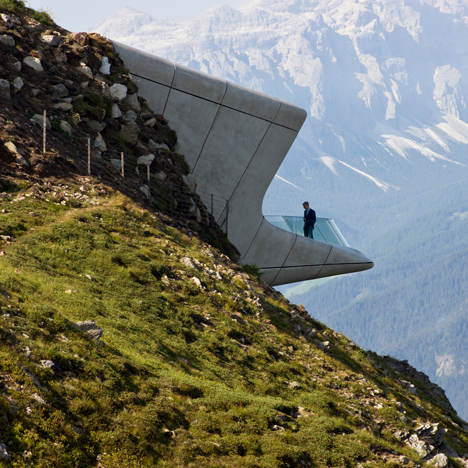
Other buildings completed in the past year include the Messner Mountain Museum buried into an Alpine peak, a new facility for studying Middle eastern culture at the University of Oxford, and a trio carved towers  designed to look like giant pebbles in Beijing.

Messner Mountain Museum by Zaha Hadid
Messner Mountain Museum, Corones, 2015

Zaha Hadid Architects has a vast number of projects in progress. Eagerly anticipated buildings such as the soon-to-complete parasitic a major new airport terminal in Beijing will cement Hadid’s legacy as one of the most tenacious, divisive and celebrated architects of her generation.  (according to dezeen.com)

all what we can say RIP Zaha we all love you and love your works …. and here i want to show you some of here incredible projects if you have any comments please feel free to write ….

your’s archdoodz

zaha10Zha, Jazzzaha8zaha 7zaha 5zaha 6zaha 2zaha 3zaha 4

NESTLE Chocolate Museum

Architect: Rojkind Arquitectos
Piuirincipal in Charge: Michel Rojkind
Project Team: Agustin Pereyra, Mauricio Garcia-Noriega, Moritz Melchert, Juan Carlos Vidals, Paulina Goycoolea, Daniel Dusoswa, Matthew Lohden
Client: NESTLÉ
Traqs: Luis Araiza, Jesús Gonzales, Agustin Villegas
Efficiency: Fermin Espinosa, Francisco Espinosa, Carlos Juárez, Ricardo Brito, Francisco Villeda, Ana Isabel Morales, Verónica Jaimes
Structural Engineer: Moncad [Jorge Cadena]
Lighting Design: Noriega Arquitectonics Iluminators [Ricardo Noriega], Fernando Gonzáles
Landscape Design: Ambiente Arquitectos y Asociados, [Fritz Sigg, Juan Guerra], Erick Flores
Construction Photographs: Guido Torres
Constructed Area: 634 sqm
Design Year: 2007
Construction Year: 2007
3D Massing: Juan Carlos Vidals
Photographs: ©Paúl Rivera


floor plan

the first phase took shape and required a 634 m² space that could accommodate the main entrance for the children to have the most pleasant experience and to start the voyage into the chocolate factory as soon as they enter this playful yet striking space, the reception area, the theater that would serve as preparation for the Nestle experience, the store or museum shop, and the passage to the tunnel inside the old existing factory.

21


Record time

An architectural experience. Sensorial architecture, from the surprises, the twists and folds. An architectural challenge. As much the forms and the spaces they contain, like the times are taken to the limit. Foldings and record time: 2.5 months to finish….and that included design and construction!

The complexities of architectural projects require a team effort and in this case we organized 3-8hr shifts in order to deliver the project in time.

3section bb


The concept: a playful folding shape that is evocative for kids, of an origami shaped bird, or maybe a spaceship, or could it be an “alebrije”? What might seem like a capricious form is the fruit of diligent design explorations and an intuition about what the place should express. The spectacular result is as firm as the faceted shapes which sustain it.456

7891011121314151617181920


welcome to my blog

hello everybody , i created my blog to share with you my thoughts and knowledge about architecture and much more subjects , i believe that architects are good in everything 🙂 so i would like to talk about several fields belong on somehow to architecture .

as an architect i love music , arts, photographing, dancing, cooking , languages ,cultures and philosophy so i am ready to help others get more information and data either for their architectural study or interests … i wish you that will like my blog and i hope to get your feedback to improve myself and my blog …

thanks all ..

.. yours ..         Dua’a